An anonymous safety survey for middle and high school students
The best school safety questions ask students where and when they feel unsafe, who they would tell, and whether telling works. The core 12 needs about five minutes of homeroom; after that, add a set on bullying, reporting, drills or the trip to school.
- 30questions
- 12in the core set
- 5 minto answer the core
- Grades 6to 12
By Michael Hodge, BSc Psychology Updated September 2026
Places, adults, bullying, drills and travel: all the questions
Your core 12 starts out ticked. Pick extra sets or single items, then send the survey from the builder, print it, or copy any question as text. Below each question sit the choices students see, plus what the result says about your school.
The core 1212 questions
Seven statements about places, adults and reporting, three questions about what has actually happened, and two open questions. Together they give a full first reading of how safe students feel.
-
I never worry about being hurt in class.
Strongly disagree12345Strongly agree1 = Strongly disagree, 5 = Strongly agreeThe baseline. Compare every other place statement with this one to see where safety drops.
-
I move through hallways and stairwells without worry.
Strongly disagree12345Strongly agree1 = Strongly disagree, 5 = Strongly agreeClass changes are when adults are thinnest on the ground. A gap between this and the classroom item points to supervision.3
-
My trip to and from school feels safe.
Strongly disagree12345Strongly agree1 = Strongly disagree, 5 = Strongly agreeSome of what keeps students home happens outside the gate. This catches it.
-
I have an adult here I could go to for help.
Strongly disagree12345Strongly agree1 = Strongly disagree, 5 = Strongly agreeA trusted adult is what turns a worry into a report. Low scores here explain low reporting.
-
Students here look out for each other.
Strongly disagree12345Strongly agree1 = Strongly disagree, 5 = Strongly agreePeer climate in one line. Read it next to the bullying question below.
-
Adults here act on bullying when told.
Strongly disagree12345Strongly agree1 = Strongly disagree, 5 = Strongly agreeStudents only report when they expect action. This is the belief behind every reporting number.
-
I know what to do in a lockdown or fire drill.
Strongly disagree12345Strongly agree1 = Strongly disagree, 5 = Strongly agreeDrills that students cannot explain have not done their job. A quick check after each drill.
-
In the past 30 days, did you stay home or skip a class because you felt unsafe?
NoYes, onceYes, 2 or 3 timesYes, 4 or more timesTurns feeling unsafe into missed learning, the number boards and families take seriously.2
-
This school year, has another student bullied you, at school or online?
NoYes, once or twiceYes, about once a monthYes, every week or moreNot sureFrequency matters more than a yes. "Not sure" is worth reading: it can mean teasing that nobody has named yet.
-
Where in or around school do you feel least safe?
Hallways or stairwellsRestrooms or locker roomsCafeteriaOutside on school groundsBus, stop or walk to schoolOnline, in school chatsNowhere, I feel safe everywhereTick all that applyThe hotspot question. Count the ticks per place and you have a map of where to put adults.3
-
What is one thing that would make this school feel safer for you?
Open answerOne change per student keeps answers concrete. They sort quickly into a handful of themes.
-
What makes you feel safe here now?
Open answerNames what to protect when budgets and rotas change. Students often mention one person or one place.
Bullying and online harm5 questions
Add these when bullying shows up in the core answers, or when your district wants a bullying measure.
-
Which of these has happened to you at school this year?
Insulted or called namesRumours spread about meLeft out on purposePushed, tripped or hitThreatenedThings taken or brokenPrivate photos sharedNone of theseTick all that applyStudents who would never tick "bullied" will tick what happened. The list shows which kind is common here.1
-
How often have you seen another student being picked on this year?
NeverOnce or twiceA few timesOftenAsks what students have seen, which many find easier to answer than what happened to them.
-
The last time you saw it happen, what did you do?
I have not seen itNothingTold them to stopHelped afterwardsTold an adultShows whether bystanders act, and which action to teach next.
-
Adults step in when a student is picked on.
Strongly disagree12345Strongly agree1 = Strongly disagree, 5 = Strongly agreeWhether staff are seen to act in the moment, not just after a report.
-
The school helps when trouble starts online.
Strongly disagree12345Strongly agree1 = Strongly disagree, 5 = Strongly agreeOnline conflict walks into school the next morning. This asks whether students think the school will help.
Telling an adult4 questions
For planning or checking a reporting route: an anonymous form, a tip line or counselor drop-ins.
-
If you were worried about your safety, who would you tell?
A teacherA counselorA coach or club adviserA school leaderSecurity staffSomeone at homeA friendNobodyTick all that applyShows which adults students actually trust, so you know who needs training on what to do next.
-
Do you know how to report a worry at this school without giving your name?
YesNoNot sureIf most say no, the reporting route exists on paper only.
-
Other students would not find out if I reported.
Strongly disagree12345Strongly agree1 = Strongly disagree, 5 = Strongly agreeFear of being seen reporting can stop a student who knows exactly how to report.
-
If you reported something this year, what happened next?
I have not reported anythingIt was sorted outDone, but it did not helpNothing happenedI never found out"I never found out" is the easiest answer to fix: tell students their report was acted on.
Drills, rules and security4 questions
For safety teams reviewing drills, supervision and building security from the student side.
-
Our drills show me where to go from every room I use.
Strongly disagree12345Strongly agree1 = Strongly disagree, 5 = Strongly agreeDrills are often practised from the homeroom only. Gyms, labs and lunch are where students get lost.
-
How do the security measures here (cameras, locked doors, staff at entrances) make you feel?
SaferNo differentLess safeNot sureStudents differ on cameras and guards. Check how yours feel before adding more.
-
School rules on behavior are applied the same way to every student.
Strongly disagree12345Strongly agree1 = Strongly disagree, 5 = Strongly agreeRules that feel unfair lose their authority, and students stop expecting adults to help.
-
There are adults around in the places students go between classes.
Strongly disagree12345Strongly agree1 = Strongly disagree, 5 = Strongly agreeThe direct supervision question. Pair it with the least-safe places to see where adults are missing.3
The trip to and from school3 questions
Add these when the core trip statement scores low, or when families raise the walk, the bus or the stop.
-
How do you usually get to school?
WalkBike or scooterSchool busPublic transportCarOtherLets you split the trip answers by route, since bus riders and walkers face different problems.
-
Which part of the trip feels least safe?
Leaving homeWaiting at the stopOn the bus or trainArriving at or leaving the school gateNone, the whole trip feels safePoints to one stretch you can do something about, such as a staffed gate at dismissal.
-
What would make getting to or from school feel safer?
Open answerStudents name specific corners, stops and times that no map shows.
About you (optional)2 questions
Add these only to compare grade bands or newcomers. Leave out any group so small that a single student could be spotted.
-
What grade are you in?
Grade 6 to 8Grade 9 to 10Grade 11 to 12Prefer not to sayBullying reports peak in middle school, so a school-wide average can hide the grades that need help.1
-
How long have you been at this school?
This is my first year1 to 2 years3 years or moreNew students may not have found a trusted adult yet. Compare their answers on the adult statement.
Running a safety survey students will answer honestly
Safety answers are worth acting on only when students trust the process. Four choices make that happen.
Students bullied during school, by grade
Read the results by grade band
Bullying is not spread evenly across a school. In the 2021-22 national survey, 27% of sixth graders said they were bullied during school, against 10% of eleventh graders.1 Younger students are also more likely to speak up: 62% of bullied sixth graders told an adult at school, but only 32% to 41% of bullied students in grades 8 to 12 did.1 Ask the grade band in the About you set and read every result for middle school on its own.
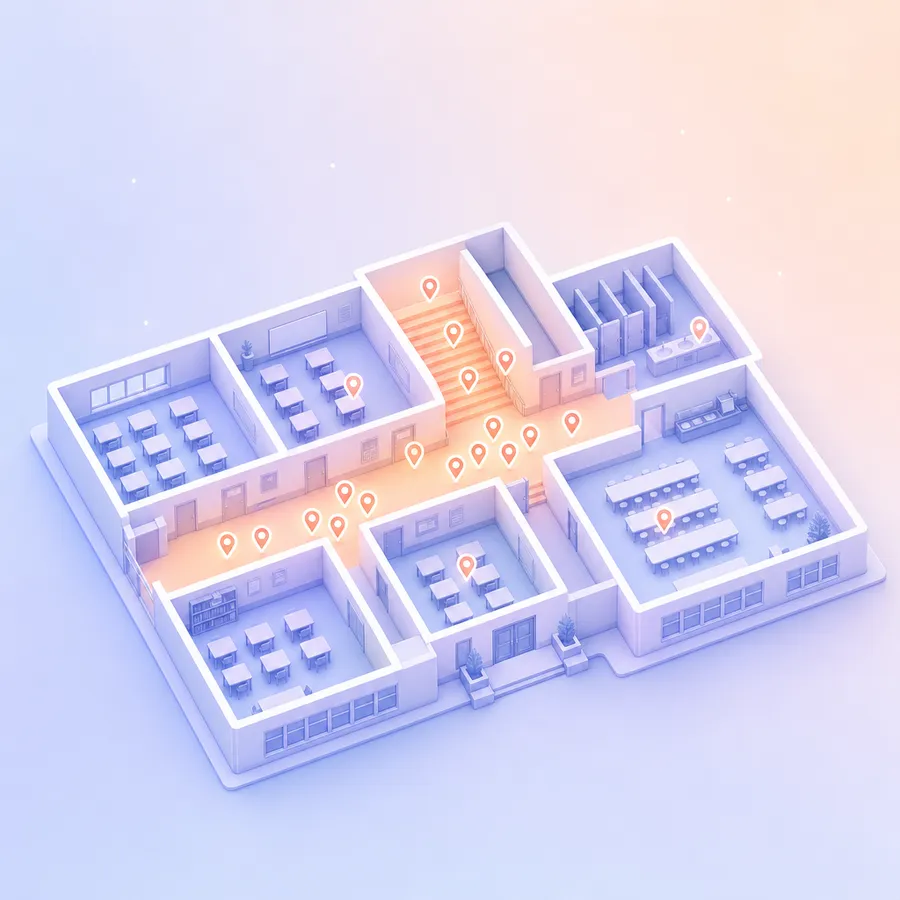
Ask where it happens, not only whether
A single "Do you feel safe at school?" gets a polite yes. Asking about classrooms, hallways and the trip home separately shows the places that pull the average down, and the least-safe places question turns that into a map you can act on the same week.
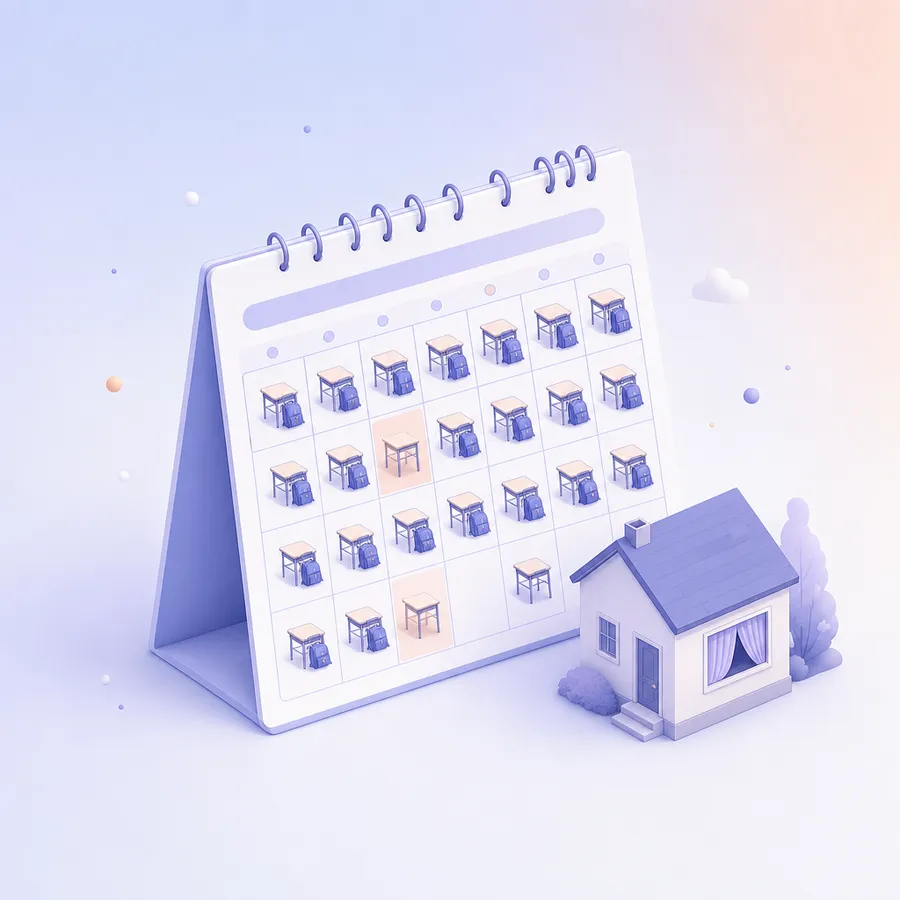
Count the days students stay away
Feeling unsafe costs learning time. In 2023, 13% of US high school students said they had missed school at least once in the past 30 days because they felt unsafe at school or on the way there, up from 7% in 2013.2 The missed-days question in the core gives your school its own figure to track from one year to the next.

Keep it anonymous and say what happens next
Students describe bullying honestly once they are sure no answer leads back to them. Leave the name field out, run it in class time so everyone answers at once, and keep small groups out of the report. Then close the survey with a line on how to get help today, as the section on follow-up below explains.
Straight after a fire or lockdown drill, turn the drill statement into a live class poll for the whole room, then check in seconds whether everyone knows where to go. Our poll setup steps cover sharing it on a classroom screen.
Turn the least-safe answers into a hotspot map
The places question is the one that changes where adults stand tomorrow. Here is how to read it, with made-up counts from a school of 400.
| Place | Students who ticked it | First thing to try |
|---|---|---|
| Hallways or stairwells | 96 | Teachers at classroom doors during changes; stagger the busiest bell |
| Restrooms or locker rooms | 71 | Regular checks by staff; ask which restroom in the next survey |
| Online, in school group chats | 58 | A named adult for online problems and a way to send screenshots |
| Cafeteria | 34 | Adults walking the room, not standing at the door |
| Nowhere | 212 | Ask this group what keeps them safe, and protect it |
Why places, and why at those times
When students and teachers in five high schools marked violent incidents on school maps, the marks bunched up in hallways, dining areas and parking lots, at times when adults were not usually there. The researchers called these "unowned" places.3 National figures point the same way: among students who were bullied in 2021-22, 39% said it happened in a classroom and 37% in a hallway or stairwell.1
Split the counts by grade band before you act. A stairwell that only middle schoolers avoid calls for a different fix than one every grade avoids. Then run the same question a term later and compare the counts place by place.
See the weak places and the weak links side by side
Enter the tally for each answer point on the seven core statements. The chart puts them side by side so the weak places and the weak links stand out. Print it for the safety team or share a simplified version with students.
- 1For every statement, add the 4s and 5s together and divide by the total answers for that statement. The report does this sum for you.
- 2Compare the place statements first. If hallways score well below classrooms, the fix is supervision at class changes, not a new rule.
- 3Then look at the trusted-adult and reporting statements together. When both are low, students are handling problems alone.
- 4Share two findings and one change with students within a month, then run the same survey next term to see whether the chart moved.
Core safety statements
The five to ask if time is short
One place statement, one about a trusted adult, missed days, the hotspot map and one open question. Five minutes of homeroom covers them.
- 01I move through hallways and stairwells without worry.
- 02I have an adult here I could go to for help.
- 03In the past 30 days, did you stay home or skip a class because you felt unsafe?
- 04Where in or around school do you feel least safe?
- 05What is one thing that would make this school feel safer for you?
One sheet per student, collected in a sealed box
Paper works well in homeroom, where every student answers at once and nobody has to log in. Students drop the finished sheets into a sealed box, and you tally them on the worksheet. Page sizes suit both letter and A4 printers.
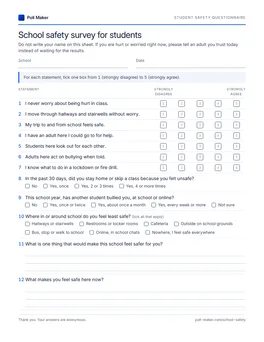
Student safety questionnaire
The core 12 on the first page with boxes to tick, then the bullying, reporting, drills, trip and About you sets.
Download PDF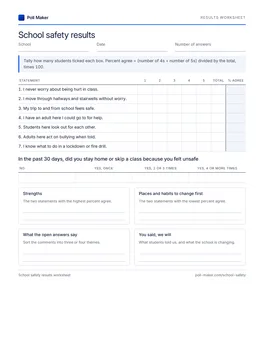
Results worksheet
Tally the seven statements and the places students avoid, work out percent agree, and write down the first places to change.
Download PDFWhen an anonymous answer needs a response
Ask students about safety and some will tell you about something happening now. Plan for that before the survey opens.
- End with a way to get help. The last screen and the bottom of the paper form should say who to talk to today and how to use the school's reporting route. Students who need help now should not have to wait for a report.
- Have a counselor read the open answers within a day. Open answers are where urgent messages turn up. Agree in advance who reads them and what happens if one names a person or a threat.
- Be exact about privacy. Say "we will not ask for your name" if that is true. Do not promise that nothing will ever be followed up, because a serious answer may have to be.
- Tell students what changed. A short note to every homeroom a few weeks later, naming one or two changes, is what makes the next survey worth answering.
Staff, principals and parents see different things
This survey is for students. The adults around them can answer questions students cannot, so plan their surveys to sit alongside it.
| Who | What only they can tell you | Where to start |
|---|---|---|
| Students | Where they feel unsafe, what they have seen, whether they would tell | The 30 questions on this page |
| Teachers and staff | Supervision gaps, how incidents are handled, training needs | The PBIS School Safety Survey for staff5 |
| Principals | Incident counts, policies, security staffing, drills held | The questions in the federal SSOCS, which NCES sends to about 4,800 public schools4 |
| Parents | The trip to school, what children say at home, trust in the school | A short family survey planned with your school improvement survey |
Keep the student survey separate from the others. Questions that fit an adult, such as whether fire extinguishers are inspected, only make students guess. For other student topics, browse our education survey questions.
Four common safety questions, worded better
Four patterns that turn up in school safety surveys, and the version to send instead. Our guide to question wording has fixes for every question type.
Do you feel safe at school? (Yes / No)
I move through hallways and stairwells without worry.
Where in or around school do you feel least safe?
A yes or no across the whole building hides the one stairwell that students avoid.
Have you been bullied this year?
Which of these has happened to you at school this year?
Many students do not call what happened to them bullying. A list of specific events gets more honest answers.
Do our security officers help keep you safe?
How do the security measures here (cameras, locked doors, staff at entrances) make you feel?
The weak version assumes the answer is yes. The better one lets students say security makes them uneasy.
Would you report bullying, and do teachers respond quickly?
Adults here act on bullying when told.
If you reported something this year, what happened next?
Two questions in one. Keep the belief and the experience apart so you know which one to fix.
School safety survey questions answered
For principals, counselors and safety teams planning a student survey.
What questions should be on a school safety survey for students?
Ask how safe students feel in specific places, whether they have a trusted adult, whether telling an adult works, what has happened to them, and where they feel least safe. The core 12 above covers all five in about five minutes.
Should a student safety survey be anonymous?
Yes. Leave out names and student IDs, gather paper forms in a sealed box, and never publish results for a group of fewer than ten students. Put a line at the end telling students how to get help today, because an anonymous answer cannot be followed up.
How often should schools survey students about safety?
Once or twice a year works for most schools: early in the year, while there is time to change supervision, and again near the end. Use the same wording both times so the results compare.
Can younger students take this survey?
The wording suits grades 6 to 12. For grades 3 to 5, read each statement aloud, drop the online and trip sets, and give three answers: yes, sometimes, no.
Can I ask about bullying without naming it?
Yes, and it often works better. The bullying set lists specific things that happen, such as rumours or being left out, so students can report them without applying a label to themselves.
Put the survey in front of students this term
Share the core 12 as a homeroom link today, with any extra set your safety team wants, or hand out paper copies and gather them in a sealed box.